
Here's Why Car Production Dropped In August
Why Did Car Production Drop in August?
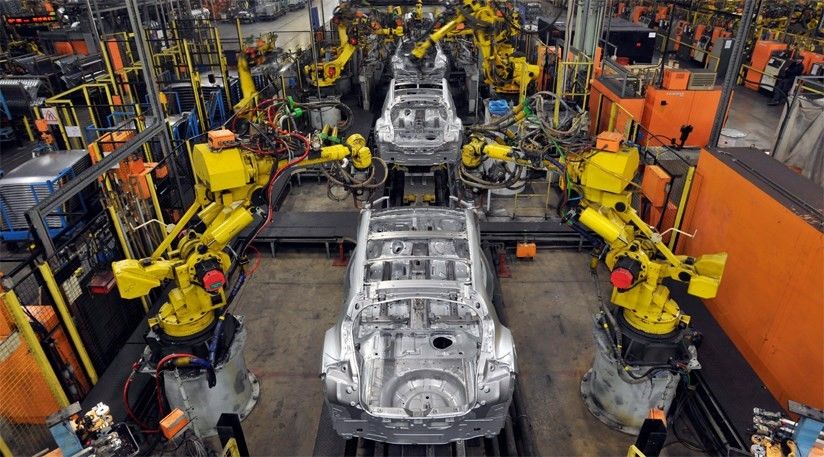
UK car development plunged by 27 per cent in August – the second successive month of drop, the SMMT has verified.
Overall, the auto sector created only 37,246 vehicles in what is usually a calm month for the industry.
The production numbers in 2021 have been low, mainly owing to global semiconductor scarcity, causing development obstructions.
Another excuse for the low production figures were the summer factory shutdowns, the SMMT discovered. However, all these hurdles couldn’t hamper the construction of electrified vehicles that now signify more than a quarter of all cars created.
Astonishingly, an unbelievable 27.6 percent of the vehicles created in August were either battery-electric (BEV), plug-in hybrid (PHEV) or hybrid (HEV). That takes their number to 10,274 units.
It actually translates to the production of 137,031 electrified vehicles since January, which is 51,679 greater than the same period in 2020.
While production for the UK market bumped 3.3 per cent in the month, the hike was equivalent to only 255 extra cars.
Away, exports dropped noticeably, with only 29,200 vehicles transported abroad – a fall of 32.5 per cent.
This drop also comprised faraway markets such as Australia, the US, and China, which experienced a downward trend of 74.9, 65.7 and 58.7 per cent.
However, EU exports weren’t that bad, down 4.9 per cent, representing nearly seven in every ten vehicles shipped in August.
Regardless of August’s challenges, development during 2021 stayed 13.8 per cent greater than in 2020.
The UK automakers created exactly 589,607 vehicles by the end of August, pushed by trades with 83.2 per cent of the lot built moved for markets overseas.
Nonetheless, the accomplishment is yet 32.0 per cent lower than the pre-pandemic 2019.
Mike Hawes, SMMT chief executive, stated:
“Another significant decline for UK car production is extremely worrying both for the sector and its many thousands of workers nationwide. While not the only factor at play, the impact of the semiconductor shortage on manufacturing cannot be overstated.”
“Carmakers and their suppliers are battling to keep production lines rolling with constraints expected to continue well into 2022 and possibly beyond. Job support schemes such as furlough have proven such a lifeline to automotive businesses, yet its cessation today comes at the worst time, with the industry still facing Covid-related stoppages, which are damaging the sector and threatening the supply chain in particular. Other countries have extended their support; we need the UK to do likewise.”
Statistics showing the effects of microchip deficiency
Experts say the production drop exhibits the full impact of the current semiconductor disaster.
Jim Holder, editorial director of What Car? defined them as a ‘foremost concern’ and confessed the outlook was ‘miserable’.
He stated: “August is typically a quiet month for the sector, but this year's results underline the crippling impact of the ongoing microchip shortage again and demonstrate how it is undermining the car industries ambitions to bounce back from the impacts of Covid-19.”
“Waiting times for some models have now been pushed beyond a year, making it difficult for retailers to manage customer expectations and demand.”
“Our own research shows just 13 per cent of new car buyers are willing to wait more than 16 weeks for their next car before they consider alternatives.”
“However, while these figures are a major concern for everyone working in and around the industry and consumers, it looks like there is worse to come, as the chip shortage intensifies.”
“There appears to be no hope of it easing until the turn of the year, and even the most optimistic predictions are for a return to normality from midway through 2022.”
“That bleak outlook threatens to undermine what in almost every other respect should be a thriving marketplace.”