
Worst March for New UK Car Registrations Since 1998
Worst March for New UK Car Registrations Since 1998
Even with a heavy demand for 22-registration vehicles last month, it was the weakest March for new vehicle registrations since 1998, SMMT data shows.
The recent report from the Society of Motor Manufacturers and Traders (SMMT) clarifies the number of new vehicles registered last month dropped by 14.3 per cent compared to March 2021.
Just 243,479 vehicles were registered during March, which is highly inadequate.
Although the dealerships were not operational in March 2021 owing to coronavirus pandemic restrictions, last month was still miserable 'underscoring the long-term impact the pandemic is wreaking on the industry,' stated the SMMT.
We can hold responsible for the current limitations for the semiconductor chips along with the apprehensions about the longstanding effect of the Ukraine war on these restrictive new vehicle sales.
In other words, the total number for quarter one is down by 1.9 per cent in 2021.
While personal registrations went up by 8.2 per cent, the general numbers for fleet registrations were down by a huge 34.4 per cent.
The demand for Battery electric vehicles (BEVs) increased by a whopping 78.7 per cent, with more than 39,000 electric vehicles sold last month.
The SMMT also believes that financial headwinds like increasing energy bills, fuel expenses, inflation, and a tight grip on home incomes will possibly influence the new car demand.

The agency said that with incentives for electric vehicles accessible by March 2023 and their lower operational expenses, “there are significant benefits for drivers who can order new vehicles now."
SMMT chief executive Mike Hawes stated: “March is typically the biggest month of the year for the new car market, so this performance is deeply disappointing and lays bare the challenges ahead. While demand remains robust, this decline illustrates the severity of the global semiconductor shortage, as manufacturers strive to deliver the latest, lowest emission vehicles to eagerly awaiting customers.”
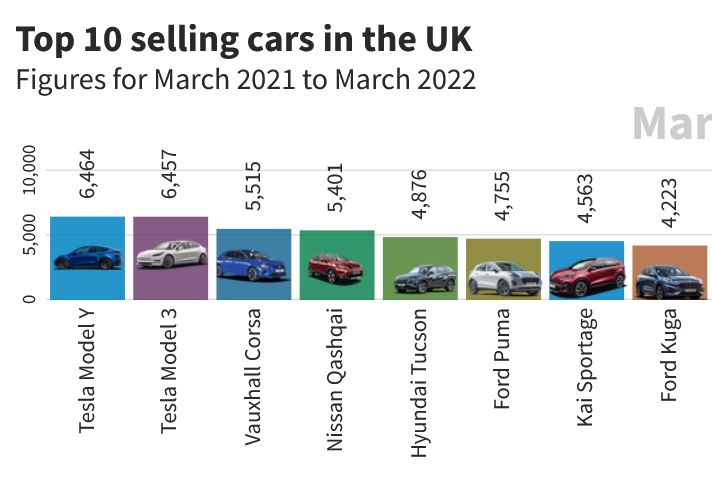
The statistics show the Tesla Model Y was sold like hotcakes last month with 6,464 units delivered, followed by the Model 3 sedan with 6,457 sales.
The Vauxhall Corsa still dominates Year-to-date with only below 10,000 sales up to now.
According to Ian Plummer, commercial director, Auto Trader, while the numbers signify the dealerships have lots of orders for new vehicles, the supply chain problems have crushed the rush for new number plates.
Jim Holder, editorial director, What Car? said,even in the month when we witness high new car registrations, the UK vehicle industry is striving to fulfill the order at a key point in its progress towards an electric future.
Richard Peberdy, UK head of automotive, KPMG, statedthey were expecting the auto sector in 2022 to improve the parts availability and curtail the supply chain issues. However, the Ukraine war and increased limitations in China are making things very tough.
James Fairclough, CEO of AA Cars, believes that in these difficult times for dealerships and new vehicle purchasers, they both are now focusing on the used cars. James has seen a rise in interest of people for secondhand cars that are readily available to drive away. It had caused a surge in the average prices of many vehicles last year.
Alex Buttle, the co-founder of Motorway.co.uk, terms the decline in March 2022 sales very disappointing, especially considering the dealerships in March last year remained close. Since supply chain and microchip challenges have no sign of easing any time soon, the used car market will continue to grow.
Source: CarDealerMagazine (CDM)
Image: Automotive Logistics
Charts: CDM